
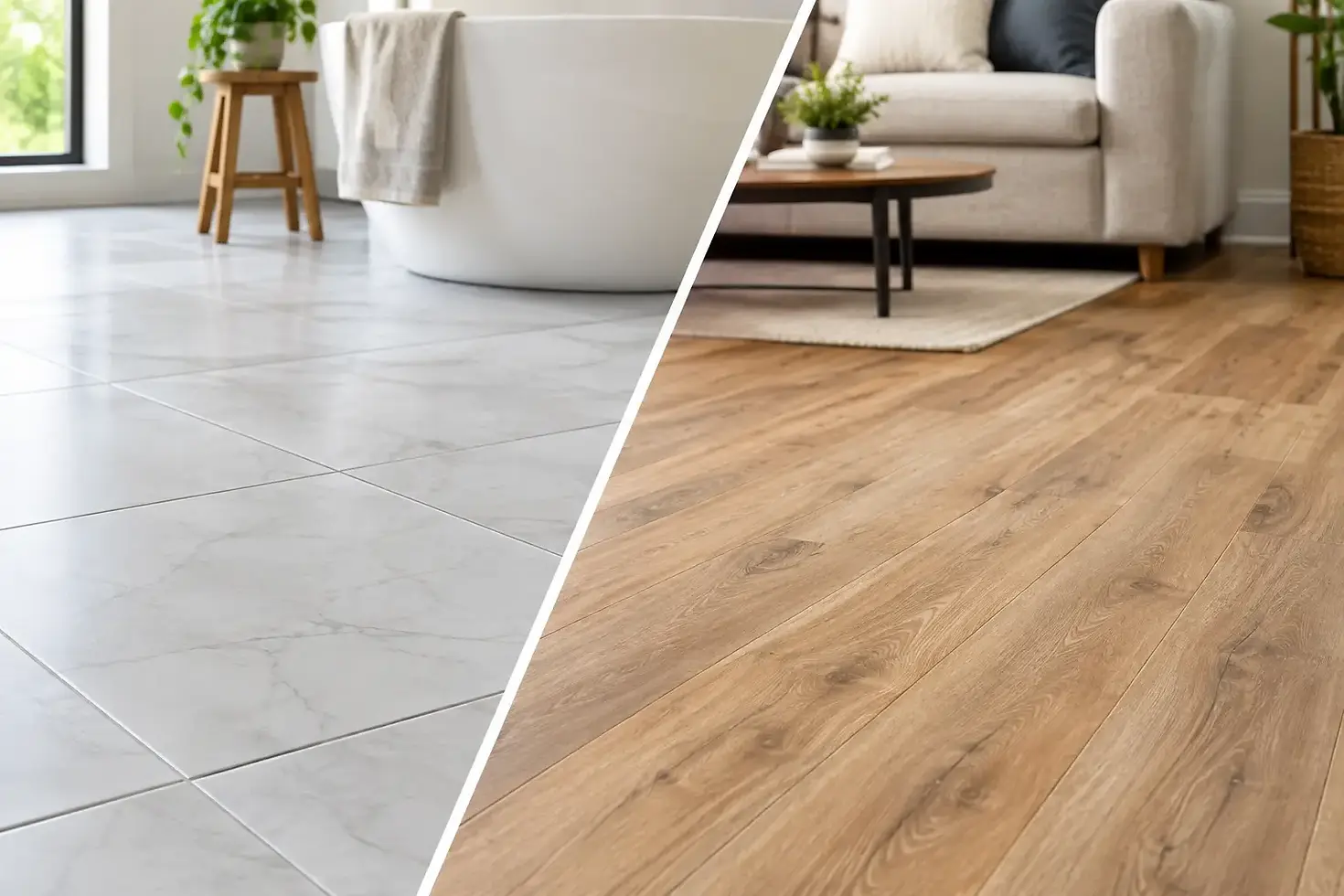
Tile Versus Luxury Vinyl Flooring Compared
A cold bathroom floor on a January morning, a busy kitchen with wet boots by the door, and a basement that sees changing humidity all place real demands on flooring. When homeowners weigh tile versus luxury vinyl flooring, the better choice is rarely about appearance alone. Both can create a polished, modern room. The right material depends on where it will be installed, how the household lives, and what kind of long-term performance matters most.
Tile Versus Luxury Vinyl Flooring at a Glance
Tile and luxury vinyl can both work beautifully in kitchens, bathrooms, entryways, laundry rooms, and lower-level spaces. They differ in how they feel underfoot, how they are installed, and how they respond to moisture, impacts, and temperature changes.
Ceramic and porcelain tile are hard-surface materials set in mortar and finished with grout. They offer a substantial, permanent feel and a wide range of colors, patterns, sizes, and finishes. Luxury vinyl flooring, often called LVP for planks or LVT for tiles, is a layered resilient material designed to replicate wood, stone, or tile while providing a softer surface.
For many Chicagoland and Wisconsin homeowners, the decision comes down to a practical question: do you want the exceptional longevity and elevated finish of tile, or the warmth, comfort, and efficient installation of luxury vinyl? Either can be the right answer when it is selected and installed for the space.
Durability and Daily Wear
Porcelain tile is one of the most durable flooring options available for residential interiors. It resists scratches, water, staining, and ordinary foot traffic extremely well. In a heavily used foyer, family bathroom, or kitchen, properly installed porcelain can maintain its appearance for decades. It is particularly well suited to homes with pets, active families, and frequent entertaining.
Ceramic tile is also durable, although porcelain is generally denser and better suited to high-moisture or high-traffic areas. The main vulnerability with either tile is impact. A dropped cast-iron pan or heavy object can chip the surface, and repairing one tile may require careful matching and replacement.
Luxury vinyl is highly resistant to everyday scuffs and spills, making it an excellent practical choice for active homes. Quality products have protective wear layers that help guard against scratches and stains. However, vinyl is not indestructible. Sharp furniture legs, deep gouges, excessive heat, and heavy appliances can damage it. Over time, lower-quality products may show wear in busy pathways more readily than tile.
If maximum longevity is your priority, tile usually leads. If you want a durable floor that is forgiving of daily family life and easier to replace later, luxury vinyl is a strong contender.
Water Resistance Is Not the Same as Waterproofing
Both materials are often chosen for wet areas, but their performance is not identical.
Porcelain and ceramic tile do not absorb water the way many natural materials can. That makes tile a dependable choice for showers, bathroom floors, mudrooms, and laundry rooms. Still, the installation underneath matters. Grout is porous unless sealed or protected with a high-performance grout, and a tile floor must be installed over a sound, properly prepared substrate. In shower areas especially, waterproofing behind the tile is what protects the home from moisture damage.
Many luxury vinyl products are waterproof at the surface. Spills, splashes, and routine mopping are typically no problem. This makes luxury vinyl appealing for kitchens, powder rooms, and finished basements. Yet water can still find its way around edges, through gaps, or beneath the flooring if a leak is left unaddressed. Moisture trapped below a floating vinyl floor can affect the subfloor and create odors or mold concerns.
For a bathroom floor outside the shower, either material may work well. For a shower surround or shower floor, tile remains the appropriate finish material when paired with a professionally built waterproofing system.
Comfort, Warmth, and Sound
This is where luxury vinyl often earns its place in a renovation plan. It has more give underfoot than tile and feels warmer in cold weather. That can make a noticeable difference in bedrooms, kitchens, and finished lower levels where people spend long periods standing or walking.
Tile has a firmer, cooler feel. Some homeowners prefer that clean, solid sensation, particularly in a contemporary bathroom or entryway. It is also an ideal partner for radiant floor heating. Heated tile transforms the experience of a bathroom floor during Midwest winters while preserving the material's durability and refined appearance.
Luxury vinyl can reduce footfall noise compared with tile, especially when installed with an appropriate underlayment or attached pad. Tile is naturally harder and can transmit more sound, although area rugs and thoughtful room design can soften the effect. In multi-level homes, this may influence the decision for upstairs bedrooms or playrooms.
Design Options and the Look You Want to Keep
A floor should support the entire room, from cabinetry and wall color to fixtures, trim, and lighting. Tile offers an especially broad design range. Large-format porcelain can create a clean, expansive look with fewer grout lines. Wood-look tile delivers the visual warmth of wood with greater moisture resistance. Patterned tile can become a focal point in a powder room, laundry room, or entry.
Luxury vinyl has evolved far beyond the flat, repetitive patterns homeowners may remember. Today’s better products can closely resemble oak, walnut, slate, travertine, and concrete. Wide planks and matte finishes can bring a current, cohesive look to an open-concept main floor.
The difference often becomes most visible up close. Tile has depth, variation, and a crafted finish that can elevate a custom kitchen or bathroom. Luxury vinyl offers excellent visual value and continuity, particularly across larger spaces, but it may not deliver the same architectural presence as a carefully selected porcelain tile.
Consider how long you plan to live with the style. A neutral porcelain floor may suit several future design updates, while a strongly patterned or heavily textured option should be selected with the full room in mind.
Installation, Timeline, and Budget
Tile installation is labor-intensive and detail-driven. The subfloor must be stable and flat, layouts need to be planned precisely, and cuts around walls, cabinets, fixtures, and transitions require skill. Mortar, grout, curing time, and waterproofing can add time to a bathroom or kitchen renovation. The investment is usually higher than luxury vinyl, particularly for intricate layouts, large-format materials, or custom shower work.
Luxury vinyl can often be installed more efficiently, depending on the condition of the existing floor and the product selected. Some systems float over a prepared surface, while others are glued down for greater stability. This can help control labor costs and keep a project moving, especially when updating a large area.
Neither material should be installed over an unsuitable surface simply to save time. Uneven floors can cause tile cracking, and they can telegraph through luxury vinyl or affect how a floating floor performs. Proper preparation is not an optional detail. It is the foundation of a floor that looks right and lasts.
When comparing estimates, ask what is included for subfloor repair, leveling, demolition, removal of old flooring, transitions, baseboards, and moisture protection. A lower material price does not always reflect the full cost of a reliable installation.
Where Each Flooring Type Makes the Most Sense
Tile is often the best fit for primary bathrooms, showers, mudrooms, high-end kitchens, and entryways where moisture resistance, long life, and a tailored finish are priorities. It also makes sense when radiant heat is part of the renovation plan.
Luxury vinyl is often an excellent fit for basements, bedrooms, family rooms, rental properties, and large connected living spaces where comfort, budget awareness, and installation speed matter. It can also be a smart kitchen choice for homeowners who want a warm wood-look floor without the maintenance concerns of hardwood.
There are times when using both is the strongest design solution. A home may benefit from porcelain tile in bathrooms and at exterior entries, then luxury vinyl throughout the main living areas for visual flow and everyday comfort. Coordinating the tones and transitions creates a finished result without forcing one material to solve every need.
Make the Decision Around Your Home, Not a Trend
The best flooring choice should account for the condition of the subfloor, household traffic, pets, children, moisture exposure, heating plans, and the visual character of the renovation. A sample can look convincing under showroom lights but feel very different next to your cabinets and in your home's natural light.
A thoughtful design and construction team can help you compare samples in the actual space, identify preparation needs before work begins, and coordinate flooring with tile, cabinetry, plumbing fixtures, trim, and paint. CNC Design & Construction approaches flooring as part of the complete room, not as an isolated product selection.
Choose the surface that will support the way you live after the renovation is complete. The most successful floor is not simply the one that photographs well on installation day. It is the one that continues to look beautiful, feel functional, and hold up to your home for years to come.


Comments